Tungsten carbide parts
We produce tungsten carbide components for the automotive, toolmaking, medical, mining and oil & gas industries. Using powder metallurgy, we manage the full production cycle in-house - from pressing mould manufacture through sintering to final inspection and delivery.
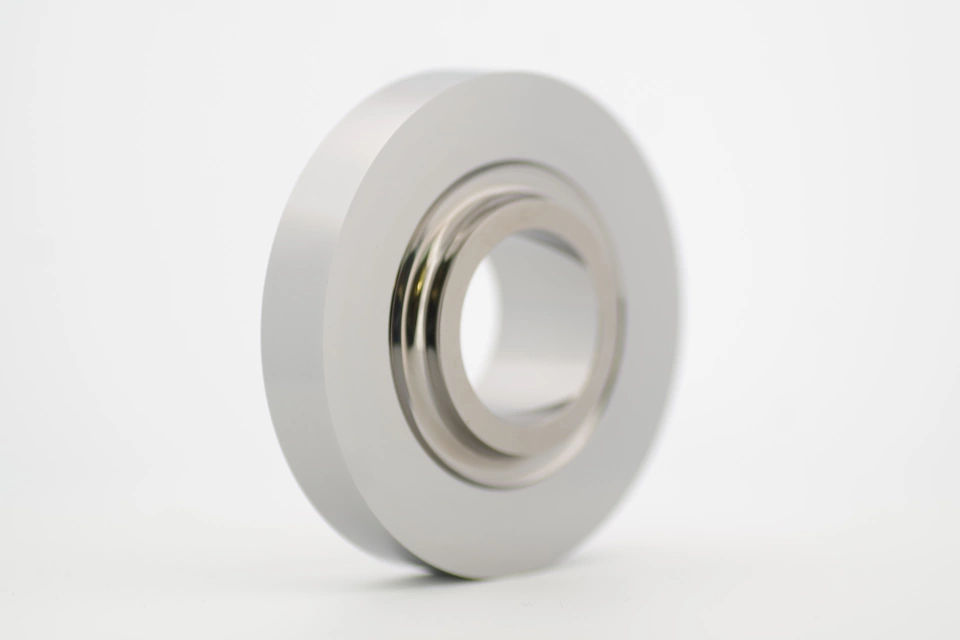
Tungsten carbide has replaced less wear-resistant materials across many demanding applications, thanks to a hardness second only to diamond. Its combination of hardness, toughness and resistance to heat and corrosion makes it the material of choice wherever conventional steel cannot deliver the required service life.
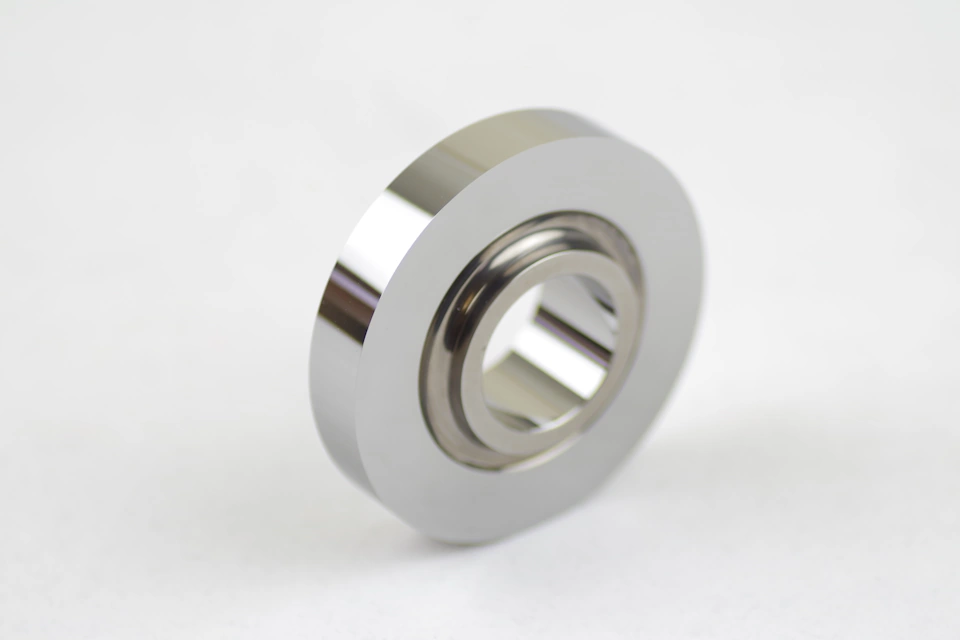
Because tungsten carbide parts are produced via powder metallurgy, we can manufacture net-shape or near-net-shape components in a wide range of geometries and volumes - including complex forms that would be impossible or uneconomical to machine from solid. We work with both traditional WC-Co grades and silicon carbide, selected to match the customer's technical requirements.
The pressing mould is the foundation of every powder metallurgy part. We manufacture moulds in-house using our own machining capabilities, which gives us direct control over dimensional accuracy and allows us to produce tooling for parts of any geometric complexity - including shapes that are impractical to obtain by any other route.
Once the mould is ready, material components are selected according to the customer's specification and blended in a controlled mixing process. The composition and mixing parameters determine the chemical and mechanical properties - hardness, density, transverse rupture strength - that the part will achieve after sintering.
Green parts are pressed in the mould under controlled pressure. Dimensions are monitored and recorded throughout the pressing stage - these results directly determine the geometry achieved after sintering, so deviations are identified and corrected before any parts enter the furnace.
Parts are then sintered in a vacuum furnace at 1350-1450 °C. This is the most critical step in the process: it is during sintering that the compacted powder transforms into a fully dense, high-strength component. The sintering cycle - temperature, dwell time and cooling rate - is controlled precisely to achieve the target material properties.
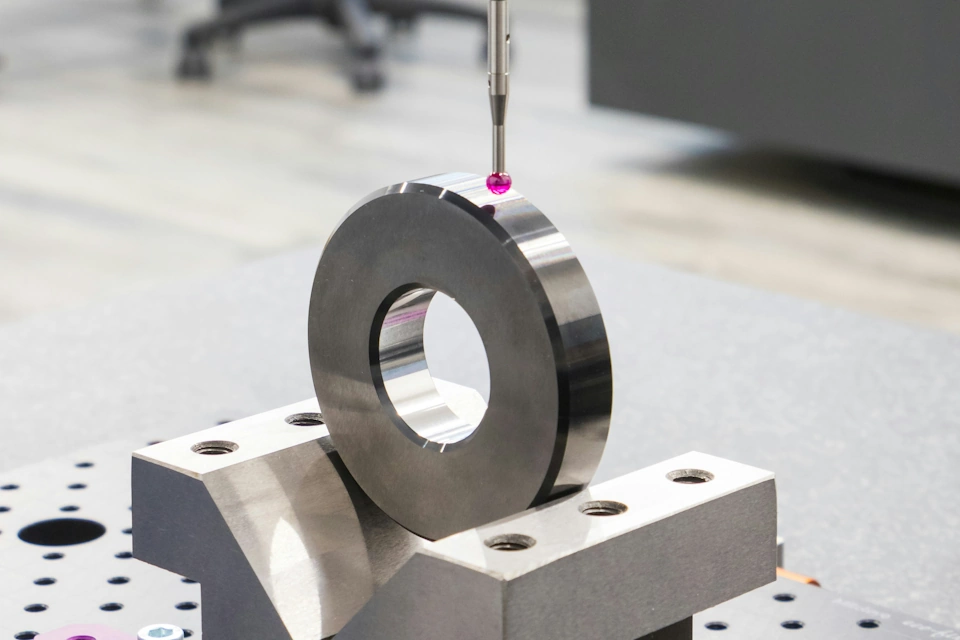
After sintering, each part undergoes final inspection covering both geometric parameters and material characteristics. Hardness, density and key dimensions are verified and recorded in an inspection report issued with every batch.
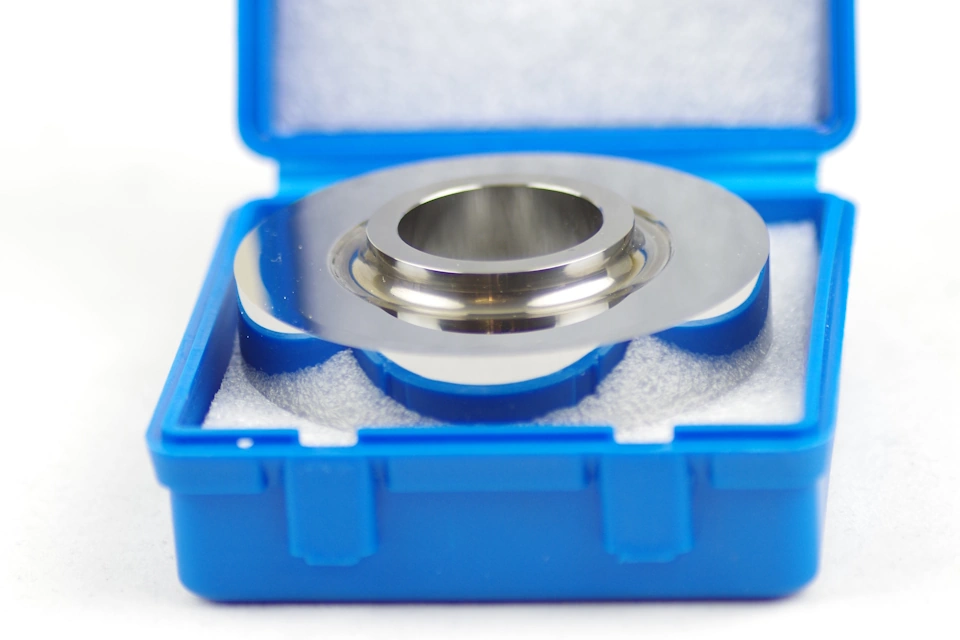
Parts are then packed to the customer's requirements and dispatched. Our engineering team is able to offer solutions up to 30% more cost-effective than equivalent market alternatives - without compromising on the dimensional accuracy or material quality that demanding applications require.
Have a similar project in mind?
We handle the full production cycle for tungsten carbide parts - from mould design to delivery. Send us your drawings or specifications and we will respond within one business day.